A standard unit is the right call when the users are workers, vendors, or general public and the priority is enough capacity at a sane cost. One standard toilet reasonably covers about 10 workers on a 40-hour week with…
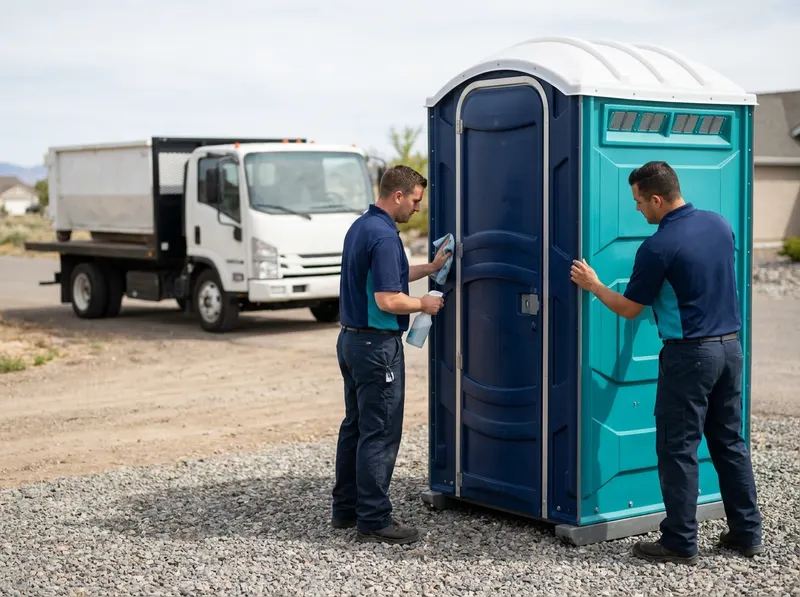
A standard unit is the right call when the users are workers, vendors, or general public and the priority is enough capacity at a sane cost. One standard toilet reasonably covers about 10 workers on a 40-hour week with weekly service, and roughly 50–75 event guests for a four-hour window before lines start to bother people. Where it is the wrong call: any site or event that must accommodate wheelchair users needs an ADA-accessible unit, a wedding reception with guests in formalwear is better served by a restroom trailer, and food service or medical staging usually needs a hand-wash station alongside the toilets. The trade-off is honest — a standard unit is the least expensive and smallest-footprint option, it needs no water hookup and no power, and it accepts gravel and dirt placement that a trailer cannot. It just does not deliver a sink, interior lighting, or step-free entry.
Placement is where Reno rentals go right or wrong, and we plan it before the truck rolls. Our service vehicle needs a firm, level spot it can reach and park beside — roughly 10 feet of width and overhead clearance for the boom. That shapes decisions across town: the mature street trees and narrow driveways in Old Southwest and Newlands Manor often mean staging a unit at the curb line instead of behind the house, alley access in the Wells Avenue Neighborhood and the Midtown District is usually the cleanest approach on tight infill lots, and new-build pads in Damonte Ranch, Double Diamond, and Somersett give us gravel room but often sit exposed. Exposure matters here more than in most markets. Afternoon wind coming down the Sierra front and across open ground near Rancho San Rafael Regional Park and the Reno-Sparks Livestock Events Center will move an unanchored unit, so we stake or ballast units in open placements and set doors out of the prevailing wind rather than facing it. In Caughlin Ranch and Northwest Reno / McQueen, HOA sightline rules and neighbor complaints drive placement as much as physics — tell us the rule and we'll set the unit behind a fence line, screen wall, or equipment stack.
Service is the part buyers get burned on, so it's spelled out. Standard construction rentals in Washoe County are typically serviced once weekly: tank pumped, interior washed down, deodorizer charged, paper and seat covers restocked. High-traffic placements — a busy commercial site, a vendor row, a public-facing unit near Idlewild Park or a river event at Wingfield Park — often need twice-weekly service or an added mid-week visit, and we'd rather set that at booking than react to a complaint. Winter work in Verdi–Mogul and higher-elevation sites gets a freeze-conscious plan, since standard units in Reno's cold snaps need antifreeze charge in the tank and clear vehicle access after a storm. If a scheduled visit slips or something goes wrong the day of your event, call (775) 261-4694 — reaching a person is part of what you're paying for.
Quantity planning is free and takes about two minutes on the phone. For construction, we count crew size, shift length, and expected duration. For events near Mackay Stadium, Greater Nevada Field, or Bartley Ranch Regional Park, we count peak-hour attendance, whether alcohol is served (plan more capacity), and how far guests will realistically walk. Long-haul placements — remote desert staging, Black Rock playa runs, sites past the county line — carry a trip charge, and we quote it up front instead of adding it later. Every figure below is a ballpark; the exact number is confirmed after a free look at your site or venue, or a clear photo of the drop spot if you'd rather not meet on site.
Every job gets a firm, written price after a free on-site visit.
Tell us about your standard portable toilet rental job in Reno and we'll send a clear, written quote — usually the same day.
 PublicCare Restroom Service Hub